

Pian Upe Game Reserve is one of Uganda’s largest and most pristine protected areas, located in the north eastern region within the Karamoja sub region. Renowned for its vast Savannah plains, dramatic mountain backdrops, and rich biodiversity, the reserve offers tourists an authentic wilderness safari experience far from the more commercialised national parks of Uganda. It is increasingly recognised as a key destination for adventure tourism, wildlife safaris, bird watching, and cultural encounters.
Pian Upe Game Reserve forms part of the greater Karamoja conservation landscape, which is one of the most ecologically significant and least disturbed regions in East Africa.
Location and Geographic Setting
Pian Upe Wildlife Reserve is located in north eastern Uganda, stretching across the districts of Nakapiripirit, Amudat, and Kween. It lies between Mount Elgon National Park and the Karamoja plains, forming a vital ecological corridor that supports wildlife movement across the region.
The reserve covers a vast semi arid landscape characterised by open Savannah grasslands, rocky outcrops, and isolated mountain ranges. The nearby Mount Kadam and Mount Napak provide dramatic scenery and influence local weather patterns, creating a mix of dry plains and greener highland zones.
Its remote location and expansive size make it one of Uganda’s most untouched safari destinations, offering tourists a true sense of wilderness and isolation.
Landscape and Natural Environment
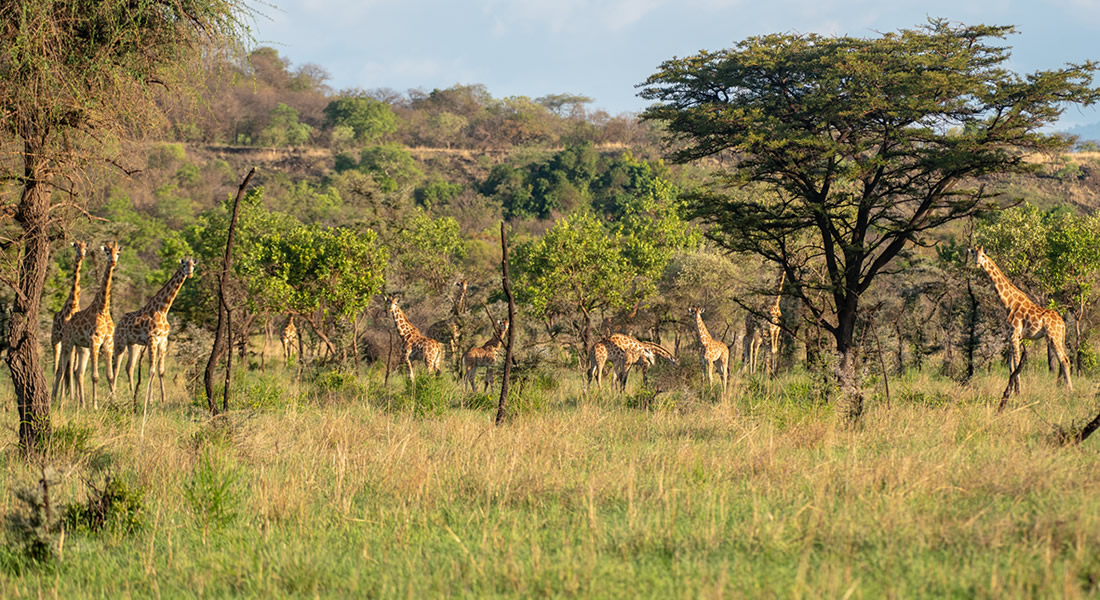
Pian Upe Game Reserve is defined by wide open plains that stretch as far as the eye can see, broken only by acacia trees, rocky hills, and seasonal rivers. The terrain is largely flat, but it is framed by distant mountain ranges that add depth and contrast to the landscape.
The ecosystem is semi arid, with vegetation adapted to dry conditions. Grasslands dominate the reserve, interspersed with thorny bushes and scattered woodlands. During the wet season, the plains transform into green expanses, attracting wildlife and supporting a burst of ecological activity.
Seasonal rivers and wetlands appear during rainfall periods, providing critical water sources for animals and birds. These temporary water systems play a key role in shaping wildlife movement patterns throughout the reserve.
Wildlife in Pian Upe Game Reserve
Pian Upe Wildlife Reserve is home to a diverse range of wildlife species, many of which are adapted to dry Savannah environments. The reserve supports populations of Uganda kob, eland, hartebeest, oribi, reedbuck, and waterbuck, all of which thrive in the open grasslands.
One of the most notable predators in the reserve is the cheetah, making Pian Upe one of the few places in Uganda where tourists can potentially spot this rare species. Other predators include leopards, spotted hyenas, and jackals, although sightings vary due to the vastness of the terrain.
Smaller mammals such as warthogs, mongooses, and hares are also common. The reserve’s ecological diversity ensures a balanced predator-prey system, even though wildlife densities may be lower compared to more densely vegetated parks.
Birdlife is particularly impressive, with over 250 recorded species. Notable birds include ostriches, secretary birds, Kori bustards, Abyssinian ground hornbills, and various raptors such as martial eagles and pygmy falcons. The open Savannah provides excellent conditions for bird watching in Uganda, especially for species adapted to dry environments.
Safari Activities and Tourist Experiences
Pian Upe Game Reserve offers a variety of safari activities designed for adventurous tourists seeking off the beaten path experiences. Game drives are the primary activity, allowing visitors to explore vast distances in search of wildlife. The open terrain makes animal spotting easier compared to forested reserves, although sightings often require patience and exploration.
Nature walks with experienced guides are also available in certain areas of the reserve. These walks allow tourists to engage more closely with the environment, learning about animal tracks, plant species, and ecological adaptations to semi arid conditions.
Bird watching safaris are highly rewarding due to the diversity of species present. Early morning and late afternoon excursions offer the best opportunities for sightings, particularly for raptors and ground dwelling birds.
Photography safaris are increasingly popular in Pian Upe due to its dramatic landscapes, expansive horizons, and unique lighting conditions. The combination of wildlife and scenic beauty makes it a strong destination for landscape and wildlife photography in Uganda.
Conservation Importance and Ecological Role
Pian Upe Wildlife Reserve plays a critical role in Uganda’s northern conservation network. As one of the largest protected areas in the country, it serves as an important ecological corridor connecting Mount Elgon National Park with the Karamoja conservation areas, including Matheniko and Bokora reserves.
The reserve is managed under national conservation frameworks aimed at protecting biodiversity, preventing poaching, and maintaining ecological balance. Its vast size allows for the movement of large mammals across wide distances, which is essential for genetic diversity and ecosystem health.
Conservation efforts also focus on restoring wildlife populations that were previously affected by poaching and habitat degradation. Anti poaching patrols and community based conservation initiatives are key components of these efforts.
Local communities are increasingly involved in eco tourism activities, helping to promote sustainable livelihoods while reducing pressure on natural resources.
Accessibility and Travel Routes
Pian Upe Game Reserve is located in a remote part of Uganda, but it is accessible by road from major towns such as Mbale, Soroti, and Moroto. The journey to the reserve passes through scenic landscapes, rural settlements, and transitional ecological zones.
Due to the condition of some roads, 4×4 vehicles are recommended, especially during the wet season. Despite its remoteness, the reserve is becoming more accessible as tourism infrastructure in the Karamoja region continues to improve.
Pian Upe is often included in extended Uganda safari circuits that focus on northern Uganda, Mount Elgon, and Karamoja conservation areas. This makes it a key destination for tourists interested in long form adventure safaris.
Accommodation Options Near Pian Upe
Accommodation near Pian Upe Game Reserve is limited but gradually developing as tourism grows in the region. Options include basic lodges, eco camps, and guesthouses in nearby towns such as Mbale and Nakapiripirit.
Some eco lodges and tented camps operate closer to the reserve, offering immersive wilderness experiences for tourists. These facilities typically provide guided safari activities, local cuisine, and comfortable but simple accommodation.
Due to the remote nature of the reserve, many tourists choose organised safari packages that include accommodation, transport, and guided tours.
Best Time to Visit Pian Upe Game Reserve
The best time to visit Pian Upe Wildlife Reserve is during the dry seasons, typically from December to March and June to August. During these months, wildlife is easier to spot as animals gather around limited water sources and vegetation is less dense.
The wet season, from April to May and September to November, transforms the landscape into a lush green environment. This period is ideal for bird watching, as migratory species are more present and breeding activity increases.
However, travel during the wet season may be more challenging due to muddy roads, making guided tours essential for safe access.
Cultural Experiences in the Karamoja Region
Pian Upe Game Reserve is located within the culturally rich Karamoja region, home to the Karamojong people. Tourists visiting the reserve can engage in cultural experiences such as traditional dances, village visits, storytelling sessions, and pastoral demonstrations.
These cultural interactions provide valuable insight into a semi nomadic lifestyle that has remained largely unchanged for generations. Cattle keeping plays a central role in local culture, and tourists can learn about its significance in social and economic life.
Cultural tourism also supports community development by providing income opportunities and encouraging the preservation of traditional practices.
Why Visit Pian Upe Game Reserve
Pian Upe Game Reserve is ideal for tourists seeking a raw, authentic, and uncrowded safari experience in Uganda. Its vast landscapes, diverse wildlife, and strong cultural heritage make it one of the most unique safari destinations in East Africa.
Unlike more developed national parks, Pian Upe offers a sense of isolation and adventure, where long horizons and quiet wilderness define the experience. It is particularly suited for experienced safari enthusiasts, photographers, and travellers interested in off grid exploration.
Pian Upe Wildlife Reserve stands as one of Uganda’s most important yet underexplored conservation areas. Its immense size, ecological diversity, and cultural richness make it a cornerstone of the country’s northern safari circuit.
For tourists seeking a genuine wilderness experience, Pian Upe offers unmatched opportunities for wildlife viewing, bird watching, and cultural immersion. As tourism in the Karamoja region continues to grow, the reserve is set to become an increasingly important destination for eco tourism and sustainable travel in Uganda.