

Semuliki National Park is one of the country’s most unique protected areas and an outstanding destination for nature lovers, bird watchers and eco tourists. Famous for its tropical rainforest, geothermal hot springs, exceptional biodiversity and rich cultural heritage, the park offers an entirely different safari experience compared to Uganda’s Savannah parks.
Established as a national park in 1993, Semuliki National Park covers approximately 220 square kilometres and protects the eastern extension of the vast Ituri Forest ecosystem that stretches into the Democratic Republic of the Congo. This makes Semuliki one of the few true lowland tropical forests in East Africa.
For tourists interested in Uganda wildlife safaris, bird watching tours, nature walks, and eco tourism in Uganda, Semuliki National Park presents an extraordinary combination of rainforest landscapes and rare species.
Its remote atmosphere and exceptional ecological diversity have increasingly positioned it among Uganda’s hidden tourism gems.
Location and Accessibility
Semuliki National Park lies in Bundibugyo District in western Uganda near the border with the Democratic Republic of the Congo.
The park is situated approximately 360 kilometres from Kampala and can be reached by road within seven to eight hours.
The journey commonly follows the Kampala, Fort Portal route through scenic tea plantations and crater lake regions around Fort Portal.
Semuliki is often combined with nearby attractions such as Rwenzori Mountains National Park and Queen Elizabeth National Park, creating diverse western Uganda safari itineraries.
Its location within the Albertine Rift significantly contributes to its biological richness and scenic beauty.
Landscape and Geography of Semuliki National Park
Semuliki National Park occupies the Semuliki Valley at the base of the Rwenzori Mountains.
Unlike many other Uganda National Parks characterised by open Savannah landscapes, Semuliki is dominated by dense tropical rainforest interspersed with swamps, rivers and grasslands.
The park lies at relatively low elevations compared to surrounding highlands, creating a warm and humid environment that supports Congo Basin vegetation.
Several rivers traverse the park including the Semuliki River, which eventually flows towards Lake Albert.
The contrast between rainforest lowlands and the towering Rwenzori Mountains in the background creates remarkable scenery attractive to photographers and eco tourists.
Biodiversity and Tropical Rainforest Ecosystem
Semuliki National Park is one of Uganda’s richest biodiversity hotspots and contains ecosystems more closely related to Central African rainforests than East African Savannah.
The park supports over 440 bird species and approximately 60 mammal species, alongside countless insects, reptiles and plant species.
Its forests host large trees, lianas, dense undergrowth and unique tropical vegetation rarely encountered elsewhere in Uganda.
Semuliki forms part of the broader Congo Basin ecosystem and protects numerous species at the eastern edge of their distribution range.
This ecological uniqueness has made the park highly important for conservation tourism, forest safaris, and eco tourism in Uganda.
Wildlife in Semuliki National Park
Although wildlife viewing differs from traditional game drives, Semuliki hosts a surprising diversity of mammals.
Species found in the park include forest elephants, buffaloes, civets, giant forest hogs, bush babies and several primates.
The forest supports chimpanzees, olive baboons, black and white colobus monkeys, red tailed monkeys and vervet monkeys.
Nocturnal species such as flying squirrels and pottos also inhabit the rainforest.
Wildlife observation usually occurs during guided forest walks because dense vegetation limits conventional safari viewing.
For tourists interested in immersive nature experiences and rainforest exploration, Semuliki provides exceptional opportunities.
Bird Watching in Semuliki National Park
Bird watching is among the park’s greatest attractions and places Semuliki among the leading birding destinations in Uganda.
The park hosts more than 440 recorded bird species, including many rare Central African forest species that occur nowhere else in East Africa.
Important species include the Nkulengu rail, lyre tailed honeyguide, white crested hornbill, black dwarf hornbill and piping hornbill.
Semuliki is especially famous for hosting numerous Guinea Congo biome species, making it highly desirable among international birders.
Bird watching excursions are conducted along forest trails and around riverine habitats where diverse species thrive.
For tourists seeking specialised bird watching safaris in Uganda, Semuliki remains one of the country’s finest destinations.
The Famous Sempaya Hot Springs
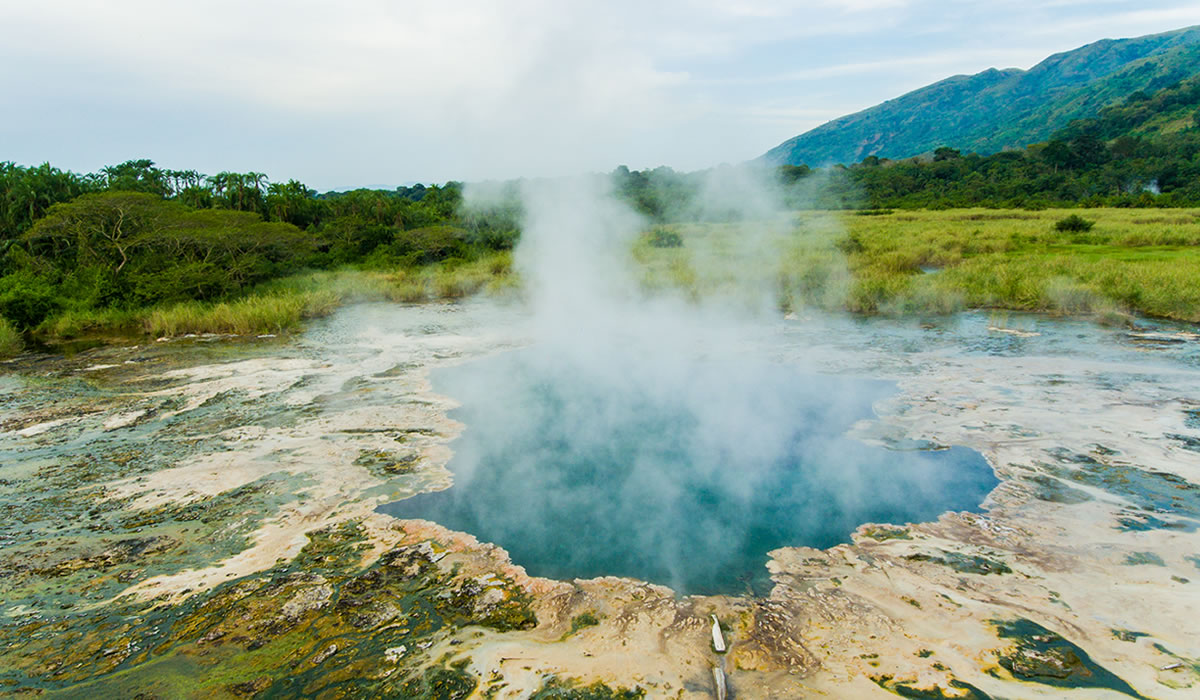
One of the most iconic attractions in Semuliki National Park is the Sempaya Hot Springs.
These geothermal springs are divided into the male and female springs according to local cultural beliefs.
The female spring, known as Nyasimbi, erupts dramatically with boiling water and steam reaching several metres high. Temperatures are hot enough to cook eggs and bananas within minutes, creating a memorable experience for tourists.
The male spring lies nearby and features calmer water flows.
Boardwalk trails through the forest lead tourists to the springs while providing opportunities to observe birds, monkeys and unique vegetation.
The Sempaya Hot Springs remain among the most photographed attractions in western Uganda and significantly enhance Uganda safari tours.
Nature Walks and Forest Exploration
Nature walks form the core tourism activity within Semuliki National Park.
Guided walks allow tourists to explore the rainforest while learning about medicinal plants, wildlife and ecological processes.
Popular trails include the Sempaya Nature Trail and the Kirumia Trail which extends deep into the forest.
The Kirumia Trail offers opportunities to encounter birds, primates and scenic river systems.
Forest exploration experiences attract tourists interested in eco tourism, photography and scientific tourism.
Walking through Semuliki’s tropical rainforest provides an entirely different atmosphere compared to Uganda’s open Savannah parks.
Cultural Experiences Around Semuliki National Park
Several indigenous communities live around Semuliki National Park and contribute significantly to the tourism experience.
The Batwa people have historical links to forest environments and offer insights into traditional forest lifestyles.
The Bamba and Bakonjo communities also inhabit the region and maintain rich cultural traditions.
Tourists can participate in community visits featuring music, dances, storytelling and demonstrations of traditional practices.
Cultural tourism around Semuliki supports conservation while creating sustainable livelihoods for surrounding communities.
Best Time to Visit Semuliki National Park
Semuliki National Park can be visited throughout the year although the dry seasons generally provide more comfortable walking conditions.
The best periods are June to August and December to February.
Rainfall remains relatively high because of the tropical rainforest environment, therefore trails may become muddy during wet periods.
Tourists should carry waterproof clothing, comfortable walking shoes and insect protection when exploring the forest.
Bird watching remains productive throughout the year due to the park’s rich avifauna.
Accommodation Around Semuliki National Park
Accommodation options around Semuliki range from luxury lodges to budget camps and guesthouses.
Many lodges near the park provide views of the Rwenzori Mountains and easy access to the Sempaya Hot Springs.
Tourists frequently combine Semuliki visits with stays around Fort Portal, crater lakes and neighbouring national parks.
Luxury safari packages often include Semuliki within broader western Uganda itineraries.
The park’s growing popularity continues to encourage tourism development within the region.
Conservation Importance of Semuliki National Park
Semuliki National Park plays a vital role in protecting Uganda’s only true lowland tropical rainforest ecosystem.
Its forests preserve rare species, support watershed functions and contribute to regional biodiversity conservation. The park also protects species linked to the Congo Basin ecosystem, increasing its international conservation significance.
Tourism revenue supports conservation activities and community based development projects. Continued eco tourism growth contributes positively towards environmental protection and sustainable resource management.
Why Visit Semuliki National Park?
Semuliki National Park offers tourists a distinctive rainforest experience unlike any other destination in Uganda.
Its tropical forests, rich biodiversity, rare bird species, geothermal hot springs and cultural experiences create a fascinating combination for nature enthusiasts.
For tourists searching for bird watching tours, forest safaris, eco tourism experiences, wildlife holidays, and unique destinations in Uganda, Semuliki National Park stands out as an exceptional choice.
Its untouched rainforest atmosphere and ecological importance continue to establish Semuliki as one of Uganda’s most remarkable natural treasures.